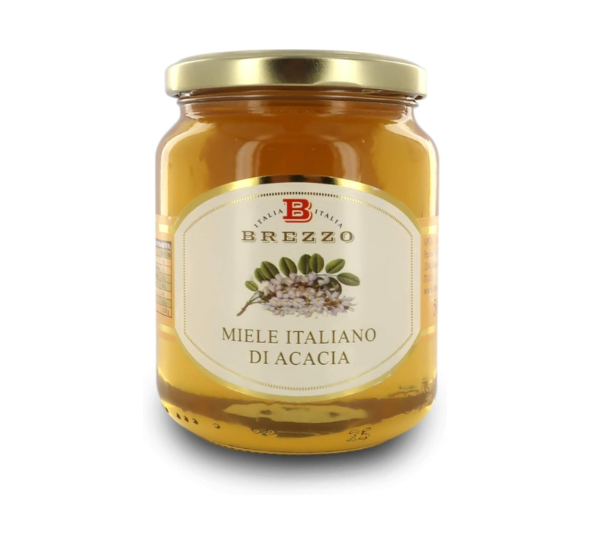
Acacia Honey
SIZE: 250 g
Description
[et_pb_section fb_built="1" theme_builder_area="post_content" _builder_version="4.27.5" _module_preset="default"][/et_pb_section]
Ingredients
Acacia honey is undoubtedly the best known and loved among Italian honeys. It is especially appreciated for its light, almost transparent color, for its sweet and sugared flavor and for the fact that it remains naturally liquid forever. Our acacia honey is produced in the uncontaminated woods of Roero and Monferrato where the plant grows luxuriantly and in the month of May it is covered with fragrant white flowers from which a precious nectar flows that bees collect with great greed and transform into excellent honey. Due to its characteristics, acacia honey can have various uses both as table honey, as an excellent sweetener, for the preparation of desserts and in combination with different types of cheeses (especially fresh goat and cow’s milk ricotta, mascarpone and blue cheeses ) or with yogurt. Flower (Latin): Robinia Pseudoacacia (Leguminosae). Native to North America, the acacia plant was introduced to Europe in the seventeenth century for ornamental purposes. Being a weed, it then spread over a very large area of ??the Italian territory. It seems that in Piedmont the first to import it were the Savoy (in particular King Carlo Emanuele II) to embellish the gardens of the Reggia di Venaria. Harvest period: April–May Harvest area: Roero and Monferrato (Piedmont) Texture: Does not crystallize Color: From water white to straw yellow Flavor: Very sweet, with notes of vanilla, sugared almond, and sweet almond
Pairing
The ultimate natural sweetener for drinks and coffee, Acacia honey is perfect when paired with yogurt, mascarpone, fresh goat’s and cow’s ricotta, as well as fresh and blue cheeses. It is also excellent on fruit tarts and cakes. Thanks to its exceptional digestibility, it is the most suitable honey for children.
Preservation
Keep in a cool, dry and protected from light place.
Color
From aqua white to straw yellow
Area
Roero and Monferrato (Piedmont)